Posts

Why to Use Disinfectant for Hospitality, Schools, Food & Beverages

Image
Disinfectants are liquid chemicals that destroy harmful microorganisms that cause infections and are dangerous for living beings. As in the covid-19 era, it’s an important aspect of our lives. We are required to disinfect each and everything where it can be any place, equipment, eatables or anything. We are required to keep extra care so disinfectants are playing a crucial part in our lives. Why Disinfectant for food and Beverage is Important? Disinfectant for food and beverage are crucial, it avoids viral infections as it not only affects human health but also the country as a whole. So disinfectant for food and beverages prevents those dangerous microorganisms as well as enhances immunity. Some of the disinfectant for food and beverages are chlorine compounds, carboxylic acid, hydrogen peroxide, etc; these not only prevent viruses but as well as enhances the life of products. And some of the disinfectant for food and beverages those are available at home are vinegar, salt, baking so...

The Most Effective Disinfectant for Pool and Spa

Image
  Pool and Spa disinfection In fections are caused by the transmission of certain pathogenic micro-organisms referred to as germs. Transmission in natatoriums and spas occurs when germs are introduced into the swimming pool water, mainly by bathers, then other bathers get contact with them. There are many infections that will be transmitted by swimming pools and spas. The infections mainly infect the skin, ears, eyes, noses, lungs, and digestive tract. The infections can produce symptoms like pussy sores on the skin, conjunctivitis within the eyes, runny noses, sore ears, and burst eardrums, pneumonia, vomiting, and diarrhea. The most serious risk to health is when there's a faecal accident within the pool. Fecal contamination is principally caused by infants who aren't toilet trained. Parents must take tutelage of their child's hygiene and make sure that they are doing not swim if they need to have diarrhea within the previous fortnight. Certainly, not a soul who has had d...

Everything About Disinfectant for Wastewater Management

Image
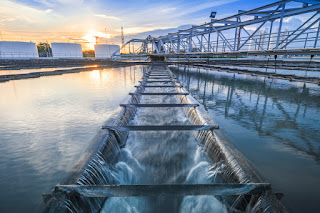
The wastewater that is generated by municipalities is perpetually a matter of attention to various bodies entrusted with preventing environmental pollution.  In this article, we discuss two terms that should be understood by those wanting to understand municipal wastewater disinfection methods and disinfectant for wastewater management . 1. Disinfection (Inactivation Rate Microorganisms (Chick's Law)) - Like Watson's law, this law also describes the relationship between the time required for the disinfecting agent to disinfect wastewater and it concentration. This is represented in the equation - dx/dt = kx, where x represents the quantity of the microorganism at an instant of time t and k represents the rate of decay of the microorganism measured as 1/time. But this law can also be written as ln(x/xo) = -kt, where x represents the number of microorganisms noticed during the time t measured as number/unit volume. xo represents the number of microorganisms before the addition of...

How Danolyte Disinfectant Spray Works

Image
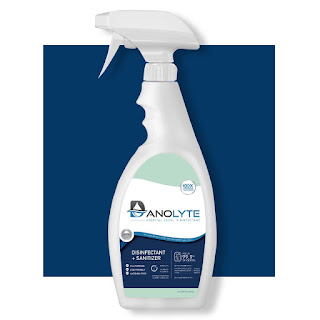
The disinfectant spray is a substance sprayed on subjects or surfaces to kill or destroy microorganisms living on them. It is important to note that disinfectants do not kill every kind of bacteria, especially the more resistant strains. The active ingredients in the sprays either interfere with the metabolism of the bacteria or destroys their cell walls. The most common places disinfectants are used include; hospitals, doctor's rooms, dental surgeries, labs, kitchens, restaurants, hotels, and bathrooms. The perfect disinfectant spray The perfect spray should be able to kill or deactivate all types of bacteria and viruses. The spray should be inexpensive, non-harmful to humans, and non-corrosive. The most important aspect though is the efficacy of the disinfectant, the perfect one will kill all bacteria in a short span of time. By killing the bacteria it prevents it from evolving and multiplying in numbers that are resistant to the original chemicals used in the kill attempt. The ...

What Are the Alternatives for Toxic Disinfectants

Image
It's not hard to see why people want to take precautions and use disinfectants to help ward off some of the nasty germs and viruses that are making their way around the world. Parents, educators, businesses, and doctors are using more and more disinfectants to protect their kids, employees, students, and patients from these harmful, sometimes deadly, viruses. Non-Toxic Disinfectants should be used in place of these harmful store-bought disinfectants because of the actual health risks that come with them. The chemicals found in most brands of disinfectants that you can find on the shelves of your local department store can have an adverse effect in battling germs.  Germs are nasty little bugs that have a way of becoming immune to the battery of chemicals that we can throw at them. In fact, recent studies have proven that there are some viruses, like staph, that are completely immune to any type of antibiotic and/or disinfectant. Of course, our culture today has been groomed for tak...

Get Now Best Disinfectants For Schools Sanitizer

Image
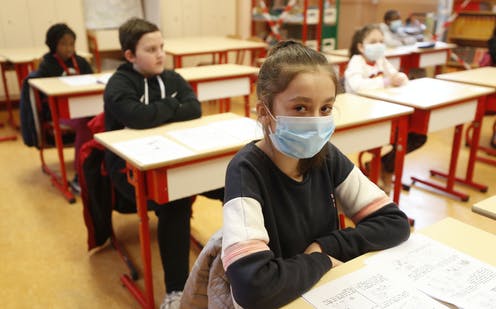
A considerable amount of sanitizing and disinfectants for school are used, which are sometimes used as a general-purpose cleaner. Sanitizers are customary to reduce, but not unavoidably abolish, microorganisms from the inorganic environment to levels examined safe as concluded by public health codes or regulations. so as for a product to be registered as a sanitizer for inanimate, non-food contact surfaces by the US EPA, it must demonstrate the power to cause a bacterial reduction of a minimum of 99.9% within 5 minutes.1 Non-food-contact sanitizer is often formulated to be effective against the categories of bacteria typically found in restrooms, while some also kill a limited number of viruses or other pathogens. Disinfectants are usually stronger than sanitizers and are, consequently, ordinarily effective against a wider range of bacteria (including, in some cases, antibiotic-resistant strains like MRSA), viruses (such as flu virus), and/or fungi. Disinfectants are usually used on ha...

Best Disinfectants for Schools

  A considerable amount of sanitizing and disinfectants for school are used, which are sometimes used as a general-purpose cleaner. Sanitizers are customary to reduce, but not unavoidably abolish, microorganisms from the inorganic environment to levels examined safe as concluded by public health codes or regulations. so as for a product to be registered as a sanitizer for inanimate, non-food contact surfaces by the US EPA, it must demonstrate the power to cause a bacterial reduction of a minimum of 99.9% within 5 minutes.1 Non-food-contact sanitizer is often formulated to be effective against the categories of bacteria typically found in restrooms, while some also kill a limited number of viruses or other pathogens. Disinfectants are usually stronger than sanitizers and are, consequently, ordinarily effective against a wider range of bacteria (including, in some cases, antibiotic-resistant strains like MRSA), viruses (such as flu virus), and/or fungi. Disinfectants are usually used...